Real estate market
Anatomy of the Banderas Bay market: six markets in one bay
Talking about "the Vallarta market" means talking about at least six distinct markets that barely touch each other. Confusing them leads to bad purchases. Here is the real structure, area by area and product by product.
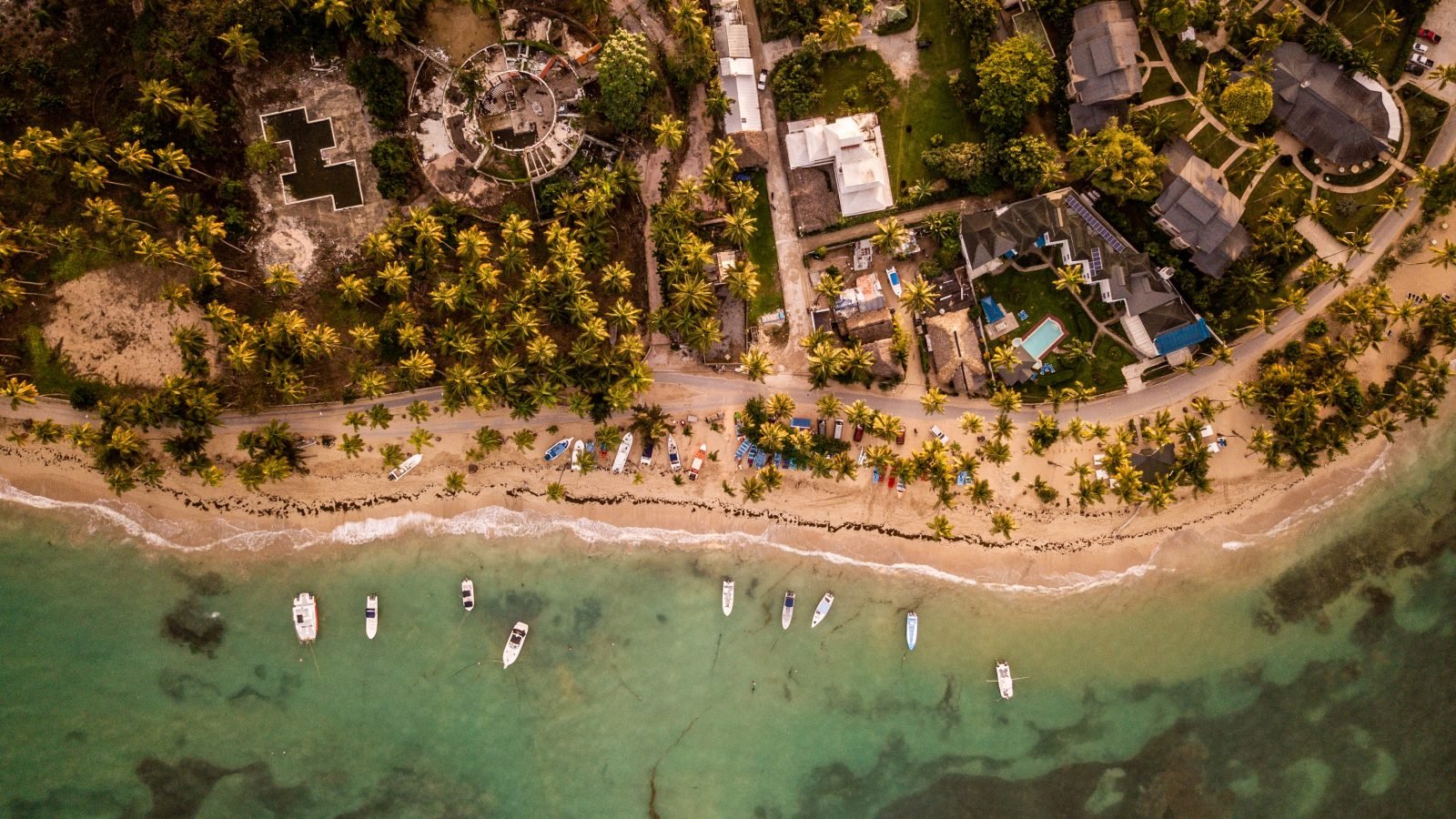
Banderas Bay spans roughly 100 kilometers of coast across two states. That arc holds a consolidated resort port, a corridor master-planned from scratch, two surf towns, a high-profile headland, a fishing village with a marina, and an agricultural valley urbanizing at speed.
Treating all of that as "the Vallarta market" is the number one source of badly calibrated purchases. A buyer carrying Zona Romántica price-per-meter in their head understands nothing of what they see in Bucerías, and vice versa. Here is the separation that actually matters.
1. Nuevo Vallarta and Flamingos: the planned corridor
The only part of the bay designed as a whole from the beginning: navigable canals, a marina, golf courses and a continuous line of beachfront resorts and condominiums, with wide streets and defined land use.
Dominant product: vertical condominium with resort amenities, plus homes in gated communities and on the canals. It is the most liquid market for the foreign buyer, because it is closest to what they already know.
What drives it: the airport minutes away, the continuous beach and the certainty that the surroundings will not change character. This is the area where the word amenity weighs as much as location: infinity pool, gym, security, management. Projects like Aria Ocean are representative of that product.
Its weakness: sameness. Almost everything competes against almost everything, and real differentiation ends up living in management and maintenance quality rather than in the floor plan.
2. Bucerías and La Cruz: the town with a coast
Heading north, the fabric changes. Bucerías has a traditional center, cobblestone streets and a long beach; La Cruz de Huanacaxtle has the bay's largest marina and a sailing life of its own.
Dominant product: a mix. Mid-scale beachfront condominiums, homes in town and — increasingly — lot subdivisions inland, minutes from the beach. Los Robles Residencial, with its 138 serviced lots, is a clear example of that last product.
What drives it: buying a town setting without paying for beachfront. It is the midpoint between the planned corridor and the high-profile north.
3. Punta de Mita, Litibú and Sayulita: the north
The headland that closes the bay concentrates the Riviera Nayarit's highest-profile market. Further north, Litibú and then Sayulita and San Pancho shift register again: open beach, surf and a town fabric that resists density.
Dominant product: residence and villa, not tower. And, where land remains, the residential lot: Ixtli Litibú sells land two minutes from the water on a stretch where that is already rare.
What drives it: scarcity. This is the part of the bay where land with fast access to the sea stopped replenishing years ago.
4. Marina Vallarta and the hotel zone: mature stock
On the Jalisco side, Marina Vallarta was Puerto Vallarta's first planned area and its condominium stock is now three and four decades old. Around it, the hotel zone and Versalles.
Dominant product: established condominiums with marina or golf views and — in Versalles — new mid-scale vertical housing aimed at full-time residents.
What drives it: entry price and central location. Its specific risk is the aging building: read the assembly minutes and ask about special assessments before buying, because a thirty-year-old property without a reserve fund eventually sends the bill.
5. Downtown, Zona Romántica and Conchas Chinas: the city
The old town and the southern hillside carry more tourist load per square meter than anywhere else on the bay: cobblestone streets, low buildings, short-term rentals and, up the hill, houses with open views.
Dominant product: small vacation-rental apartments on the flat; hillside homes with views in Conchas Chinas and Amapas.
What drives it: short-term rental yield and the appeal of a walkable center. Its limit is physical: there is nowhere to grow, and that supports value as much as it raises prices.
6. The inland valley: the market nobody reports
El Pitillal, Las Juntas and Ixtapa on the Jalisco side; Valle de Banderas, San José del Valle and La Desembocada on the Nayarit side. This is where the people who work the bay year-round live, and where most of the housing that never appears in a resort market report is being built.
Dominant product: mid-scale vertical housing — Hacienda Aldama, with its 28 apartments in El Pitillal, is a good example — and lots sold on monthly payments, like those of Desarrollos LM in La Desembocada or Villas del Pirulí.
What drives it: real local demand, not seasonal demand. It is the only one of the six markets that does not depend on tourism, and it behaves differently because of it.
What cuts across all six
The restricted zone
Everything within 50 km of the coast — that is, the first five markets — requires a bank trust for the foreign buyer. The inland valley is the only one largely outside it.
Seasonality
The bay has a winter high season and a summer low season. That affects short-term occupancy, the pace of project visits and even when it makes sense to list a property.
Where the land came from
A significant share of the region's land is of ejido origin. The problem shows up most on the cheap lot: if it cannot be deeded, nothing else matters. Verification happens at the Public Registry, not in the brochure.
Who manages it
In a market this full of second homes and vacation rentals, management is worth as much as the building. A well-run condominium holds up; a badly run one loses value no matter how good the location. This is where operators like PVRents and management platforms like Octosync do their work.
How to use this when buying
- Define the use first, not the area: year-round living, second home, short-term rental or long-horizon asset. Each use points to a different market.
- Compare within the same market. A Punta de Mita price per meter says nothing about El Pitillal.
- Ask about what you cannot see: management, reserve fund, special assessments, bylaws and — on land — registry status.
- Weigh the cost of holding, not just of buying: property tax, maintenance, trust fees, management.
The portal's directory is organized exactly that way: by property type and by area, so you can compare inside the right market instead of across markets that have nothing in common.
Frequently asked questions
Which area is most liquid for a foreign buyer?
The Nuevo Vallarta and Flamingos corridor: it is the product closest to what a US or Canadian buyer already knows, and the one that resells most readily within the same profile.
Where is there still land to build near the water?
Mainly to the north — Litibú and its surroundings — and inland from Bucerías. On the Punta de Mita stretch, land with fast access to the sea stopped replenishing years ago.
Why separate the inland valley from the rest?
Because it does not depend on tourism. Its demand comes from full-time residents, which gives it a different cycle from the coastal strip.
What should I check in a Marina Vallarta condo?
Assembly minutes, reserve fund and approved special assessments. This is three- and four-decade-old stock: deferred maintenance gets paid for eventually.
Keep reading
See all →
Real estate market