Architecture
Contemporary tropical architecture: what separates a good coastal project from the rest
Palapa roofs, parota timber, chukum plaster and river stone have been solving the same problem for centuries: living comfortably in heat and humidity. What changed is not the repertoire but how it meets structure and glass.
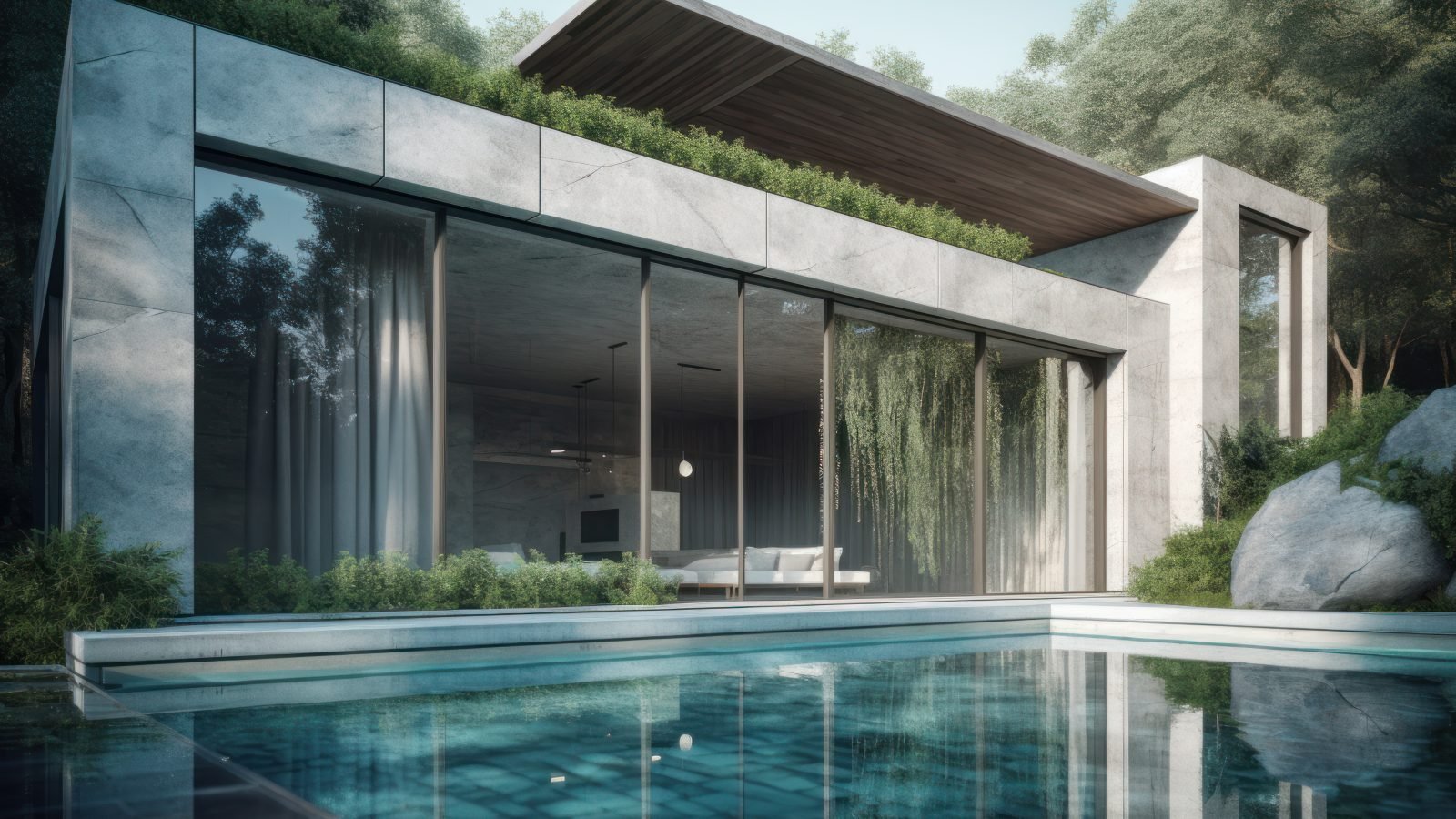
There is one architecture on this coast that repeats itself so often it now feels inevitable: a white box, a floor-to-ceiling glass wall, a narrow terrace, a mini-split in every room. It looks good in the render and performs badly in August.
And there is another that starts from the climate. It is neither nostalgic nor rustic: it uses concrete, steel and glass like anyone else, but decides where to place them based on sun, rain and wind. That is what we call contemporary tropical architecture, and these are its parts.
The roof: a palapa is not decoration
The palapa — a palm roof over a timber structure — is probably the most misunderstood element of coastal architecture. It gets treated as a decorative accent when it is, above all, a climate machine:
- Its thickness insulates against solar radiation far better than an exposed concrete slab.
- Its steep pitch sheds summer rain without pooling.
- Hot air rises and vents at the apex: it cools by convection, with no equipment.
- Its height creates an interior volume that makes habitable a space which, under a low ceiling, would be an oven.
It has a real cost: maintenance. The palm is replaced in cycles and it is not cheap. An honest project says so up front rather than letting the buyer discover it five years in.
The timber: parota and local craft
Parota is the region's timber: dense, wide-grained, available in large sections that allow long spans and exposed beams. It is used in structure, in palapa roofs, in monolithic tables and in doors.
Working it well is a matter of local craft. This is where a project leans on carpenters and workshops from the area, and where the difference shows between a properly cured beam and one that will warp. Our architecture and design directory lists the studios and suppliers working in that space, and Vallarta Decoración concentrates much of the bay's interiors and carpentry trade.
The walls: chukum, lime and stone
Chukum — a finish based on the resin of a peninsular tree — reached this coast from the southeast and stayed for a practical reason: it gives a continuous, jointless, water-resistant surface with a living texture. It ages well, which is more than can be said for vinyl paint facing salt-laden humidity.
Alongside it, two materials that have been here for centuries: lime plasters, which let the wall breathe instead of sealing it, and river stone in bases and retaining walls, which is simply what lies in the riverbeds coming down from the sierra.
The threshold: the house does not end at the window
The trait that most distinguishes a good coastal project is how it resolves the passage from inside to outside. It is not about opening a glass wall: it is about building a sequence.
- A deep overhang that shades the glass before the sun reaches it.
- A terrace wide enough for a table and chairs, not a corridor with a railing.
- Screens or louvers that filter light without shutting off air.
- A courtyard or garden that brings shade and evaporation into the home's microclimate.
A house with that threshold resolved is lived on the terrace eight months a year. One without it is lived shut in with the AC on.
Water: the material nobody declares
In the tropics water is a design material, not just an installation. Reflecting pools and pools placed windward cool the air entering the house through evaporation. And on the other side lies the part that never shows up in photos: slopes, gutters, downpipes and waterproofing. Summer rain on this coast is intense and short; a project that did not design for it suffers every year.
What ruins a coastal project
- Unshaded glass. A west-facing glass wall without an overhang is the most expensive and most common failure.
- Narrow terraces. Less than two and a half meters deep is a balcony, not a living space.
- Ignoring the prevailing breeze. Without cross ventilation, everything depends on mechanical equipment.
- Hardware that cannot handle salt. A kilometer from the sea, the wrong steel pits within months.
- Unbudgeted maintenance. Palapa, exposed timber and window systems ask for a calendar, not good intentions.
The question to ask a development. Not "what are the finishes?" but "how was solar exposure on this façade resolved?" If the answer is the tonnage of the air conditioning, the other question has already been answered — the one that matters for the electricity bill.
Who builds it
Between design and construction there is a gap that costs dearly on the coast. Building with humidity, salt and a pronounced rainy season demands builders with work done in the region: Constructora IDIPE and Grupo SVR are two of those in our builders directory. To document the result — which in this trade is also a sales argument — there are specialized agencies such as Foto de Arquitectura.
The technical continuation of this piece is the bioclimatic design guide, which covers the decisions made before the first façade is drawn.
Frequently asked questions
Does a palapa need a lot of maintenance?
Yes: the palm is replaced in cycles and that has a cost. In exchange it delivers thermal performance no exposed slab matches. What matters is that the development says so up front.
Does chukum work in a coastal climate?
It is a continuous, jointless, water-resistant finish, which is exactly what salt-laden humidity demands. It ages better than conventional paint in this climate.
How deep does a terrace need to be to be useful?
The rule of thumb on the coast is that below about two and a half meters you cannot fit a table and chairs, at which point it stops being living space and becomes a balcony.